
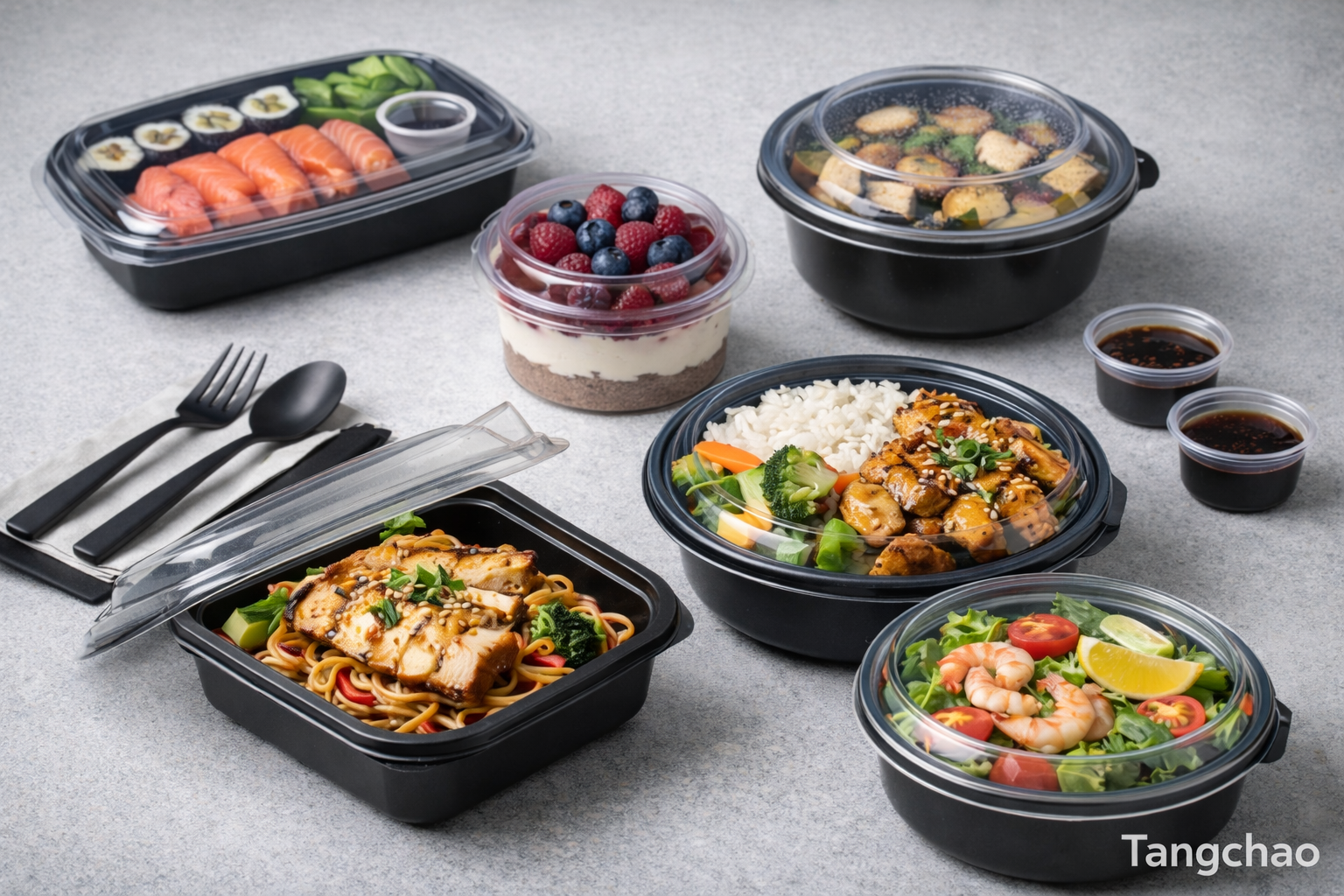
As 2026 moves forward, many food businesses are no longer asking whether to optimize their packaging, but how to make the right decisions early enough.
Across restaurants, takeaway brands, catering companies, and distributors, one pattern is clear: packaging is no longer a background cost. It directly affects operational efficiency, brand perception, and long-term scalability.
This article focuses on the packaging decisions that will matter most in 2026 — and how businesses can avoid common mistakes.
1. Cost Control Is Shifting From Unit Price to Total Cost
In the past, packaging decisions were often made based on the lowest unit price.
In 2026, experienced buyers are looking at total cost, including:
-
Order frequency and minimum quantities
-
Storage and inventory pressure
-
Delivery speed and stock availability
-
Reorder stability
A slightly higher unit price can often result in lower overall cost if it reduces stock risk, emergency reorders, or inconsistent supply.
2. Standard Products First, Customization Second
Many growing brands make the mistake of pushing customization too early.
In 2026, a smarter approach is:
-
Use stable standard SKUs during early growth stages
-
Validate sales volume and packaging performance
-
Introduce customization once demand is predictable
This phased strategy reduces risk while still allowing brands to build toward differentiation.
3. Packaging Must Match Real Usage Scenarios
Packaging failure is rarely about appearance. It is usually about mismatch with real use.
Common issues include:
-
Containers that leak during delivery
-
Lids that deform under heat
-
Compartment designs that do not suit local food types
-
Materials that perform poorly in humid or hot climates
In 2026, buyers increasingly expect suppliers to recommend practical solutions, not just sell catalog items.
4. Sustainability Requires Clear Positioning, Not Assumptions
Sustainability expectations continue to rise, but confusion remains.
A reliable packaging strategy should answer:
-
Which items are recyclable, compostable, or reusable?
-
What trade-offs exist between performance and eco-materials?
-
Which products realistically fit local waste systems?
Clear explanations build trust — vague claims do not.
5. What to Expect From a Packaging Supplier in 2026
More buyers are treating packaging suppliers as operational partners, not just vendors.
Key expectations include:
-
Consistent product specifications
-
Predictable lead times
-
Fast response on reorders
-
Honest recommendations, even when customization is not ideal
This shift reflects a more mature approach to supply chain management.
6. Tangchao Ecoware’s Approach
At Tangchao Ecoware, our focus in 2026 is not volume alone, but fit and stability.
We work with clients to:
-
Select packaging based on real usage, not assumptions
-
Balance cost, performance, and sustainability
-
Scale from standard products to customized solutions
Our goal is to support businesses that are planning for growth, not just the next order.
Final Thoughts
Packaging decisions made today shape operational efficiency for months — sometimes years.
In 2026, the most successful food businesses will be those that treat packaging as part of their strategy, not an afterthought.
If you are reassessing your packaging approach this year, starting with the right fundamentals will make every next step easier.
Tangchao Ecoware
Food Packaging & Disposable Tableware Supplier