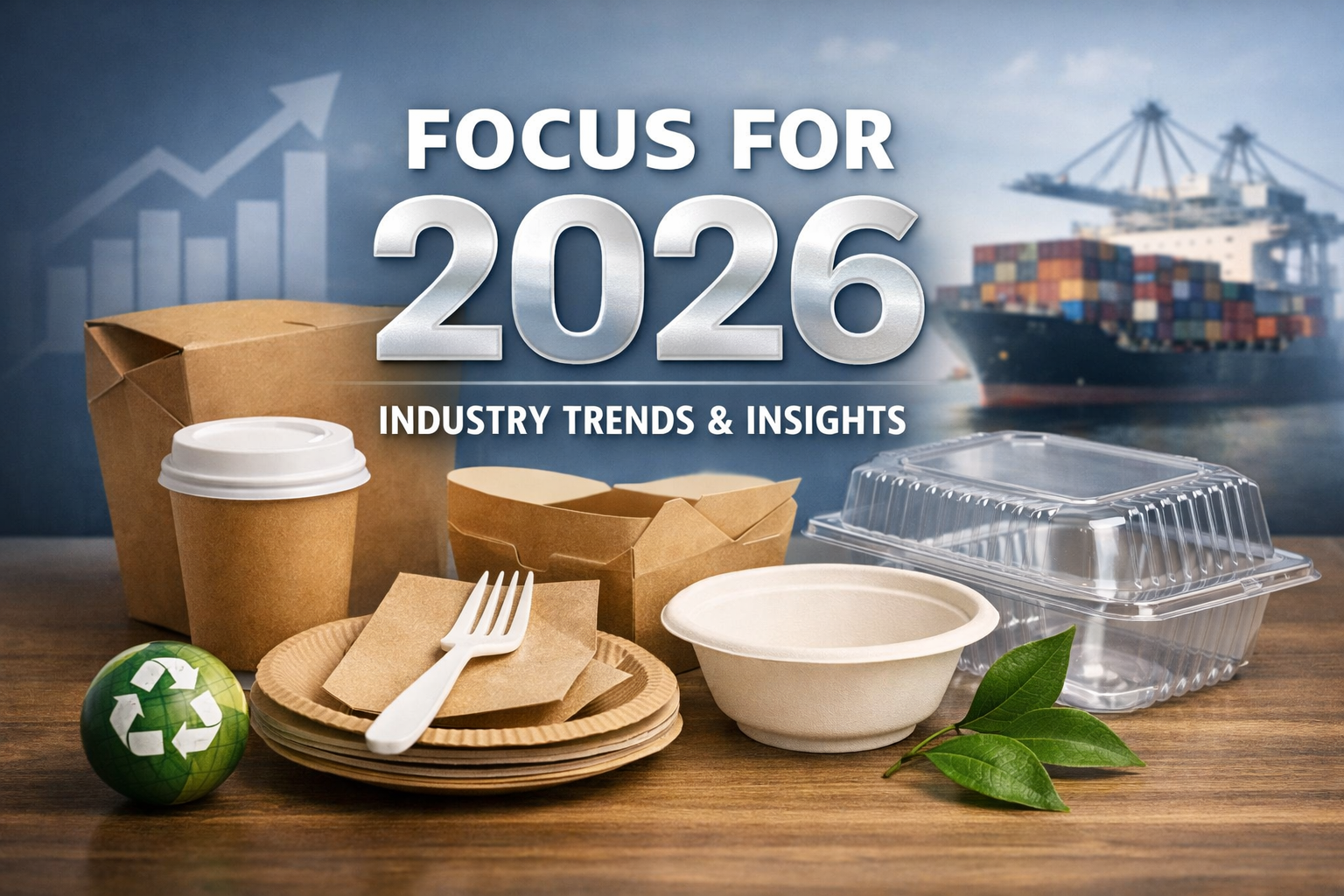
As we step into 2026, the global food packaging and disposable tableware industry is entering a new phase. Cost pressure has not disappeared, but buyer expectations, supply stability, and sustainability requirements are becoming more explicit and non-negotiable.
For restaurants, distributors, catering groups, and brand owners, the question is no longer "where can I buy disposable tableware", but rather:
-
Can this supplier deliver consistently and on time?
-
Can they support customization and branding as we grow?
-
Can they help us reduce risk in an uncertain global environment?
At Tangchao Ecoware, this is exactly the direction we are building toward.
1. 2026 Is About Supply Chain Reliability, Not Just Price
Over the past few years, many overseas buyers experienced the same problem: unstable delivery times, changing material availability, and suppliers that disappeared after one order.
In 2026, reliable supply chains outperform cheap supply chains.
What reliability really means:
-
Stable factory partnerships (not one-off trading)
-
Clear production timelines and capacity planning
-
Warehousing and fast local fulfillment where possible
-
Transparent communication before and after ordering
This is why more buyers are shifting from spot purchasing to long-term supplier cooperation.
2. Customization Is Becoming a Standard Expectation
From food delivery brands to coffee chains and catering companies, branding is now built into packaging.
In 2026, customization is no longer a "premium add-on" — it is part of basic competitiveness.
Typical customization requests we see include:
-
Logo printing on food containers and cups
-
Custom sizes and compartment structures
-
Eco-material selection (PP, bagasse, paper, CPLA)
-
Branded outer cartons for logistics and retail
A capable supplier must be able to support both standard SKUs and customized production without sacrificing lead time or quality control.
3. Sustainability Is Moving From Marketing to Compliance
Sustainability used to be a marketing advantage. In 2026, it is increasingly a regulatory and procurement requirement.
Many markets are now asking:
-
Is the material recyclable or compostable?
-
Does the supplier understand local compliance standards?
-
Can documentation be provided when required?
This does not mean every product must be 100% compostable — but it does mean buyers expect clear material positioning and honest recommendations, not vague claims.
4. How Tangchao Ecoware Is Positioning for 2026
As a food packaging and disposable tableware supplier, our focus for 2026 is clear:
-
Core product stability: food containers, bowls, cups, cutlery, and takeaway packaging
-
Fast-response supply for standard items
-
Flexible customization for growing brands and distributors
-
Clear communication across inquiry, production, and delivery
We are not trying to be the cheapest supplier. We aim to be a long-term, dependable partner for businesses that value consistency and growth.
5. Looking Ahead
The beginning of a new year is not about trends alone — it is about choosing the right partners.
Whether you are expanding your food business, optimizing your packaging costs, or planning a new brand launch in 2026, the right supply chain foundation will make the difference.
If you are reviewing your packaging strategy this year, we are open to conversations — not just transactions.
2026 is about building certainty in an uncertain market.