
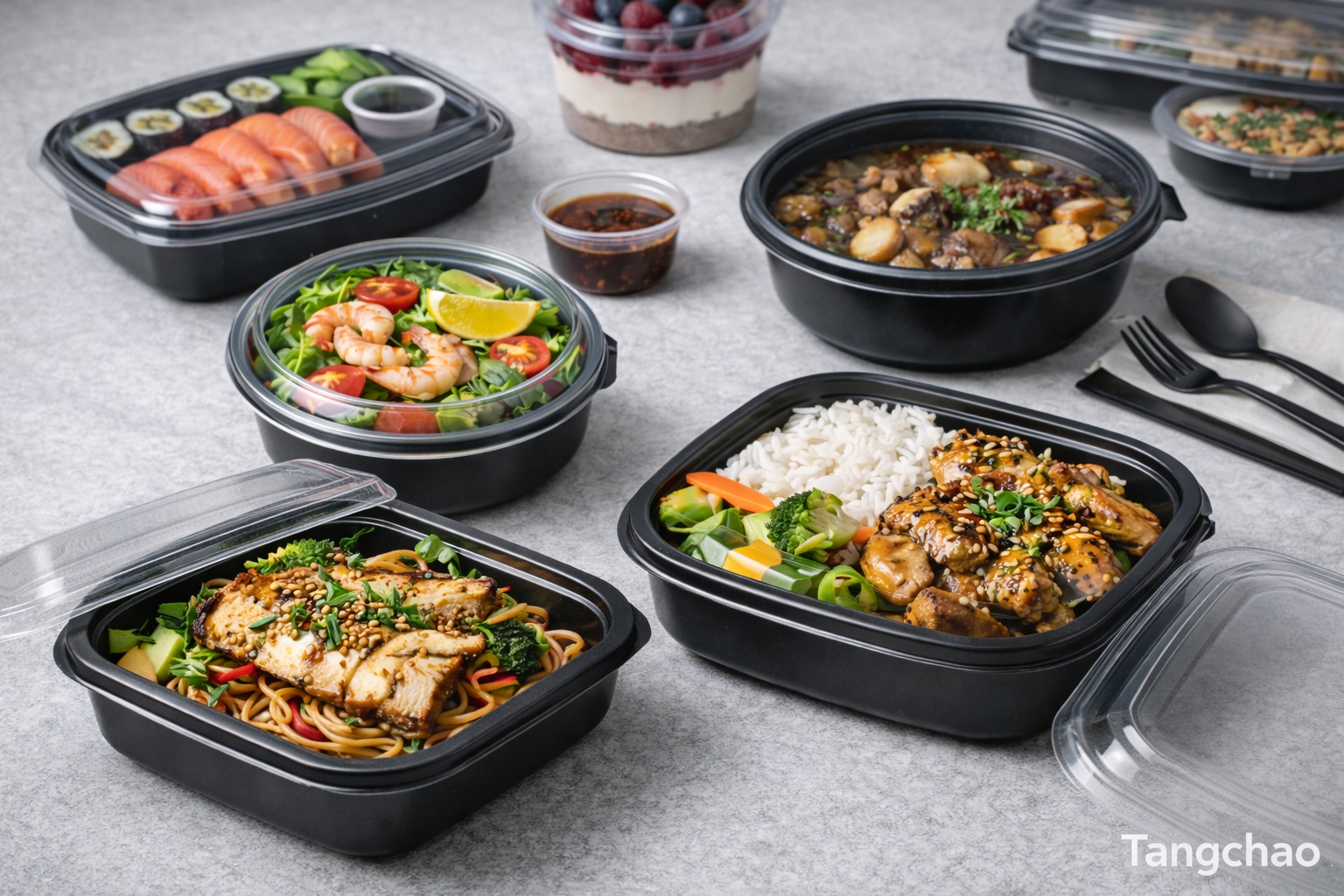
As food delivery and takeaway continue to be a core revenue channel in 2026, one detail is quietly shaping customer experience and operational efficiency: the takeaway container.
For many food businesses, container choices were made years ago and rarely revisited. But changing food formats, delivery platforms, and customer expectations mean that old packaging decisions may no longer fit today’s reality.
This guide breaks down how food businesses should think about takeaway containers in 2026 — from functionality to cost and long-term scalability.
1. Start With Food Type, Not Container Type
A common mistake is choosing containers based on catalog categories rather than actual food usage.
In practice, containers should be selected based on:
-
Temperature (hot meals vs cold dishes)
-
Moisture and oil content
-
Mixing vs separation needs
-
Delivery duration
For example, saucy rice meals, noodle dishes, salads, and desserts all place very different demands on container structure and material.
2. Compartment Design Matters More Than Appearance
Multi-compartment containers are increasingly popular, but more compartments do not always mean better performance.
In 2026, buyers are paying closer attention to:
-
Lid sealing strength
-
Compartment depth and wall thickness
-
Heat retention vs condensation control
-
Stackability during transport
A well-designed two- or three-compartment box often performs better than complex designs that sacrifice strength.
3. Material Choice Should Match Delivery Reality
Material selection is not just about sustainability — it directly affects performance.
Key considerations include:
-
PP for hot, oily, and microwave-reheatable meals
-
PET for cold food and high-visibility presentation
-
Paper or bagasse for dry or semi-dry foods
-
Clear lids for visual appeal and order accuracy
The right material reduces leakage complaints, food damage, and replacement costs.
4. Standardization Reduces Hidden Costs
Using too many container types creates operational complexity.
In 2026, efficient brands aim to:
-
Cover most menu items with a limited number of SKUs
-
Standardize lid sizes where possible
-
Simplify inventory and storage
Standardization lowers procurement risk and improves staff efficiency, especially during peak hours.
5. When Custom Containers Make Sense
Customization is powerful, but timing matters.
Custom containers are most effective when:
-
Order volume is stable
-
Core SKUs are already optimized
-
Branding needs consistency across channels
For early-stage or fast-changing menus, standard containers often provide more flexibility.
6. Working With the Right Packaging Partner
In 2026, packaging suppliers are expected to provide more than product lists.
A reliable partner should:
-
Recommend containers based on real use cases
-
Offer stable specifications and supply
-
Support both standard and custom solutions
-
Communicate clearly on lead times and changes
This partnership approach reduces trial-and-error costs over time.
Final Thoughts
Choosing the right takeaway containers is no longer a one-time decision.
As menus evolve and delivery standards rise, packaging should be reviewed as part of ongoing operations.
In 2026, businesses that align container choice with food type, delivery reality, and growth plans will gain a clear operational advantage.